RedCedar Pest Solutions provides comprehensive pest control service in Memphis, deploying heavy-duty structural barriers against subterranean termites, invasive commensal rodents, and moisture-driven insect colonies across Shelby County. Property owners searching for an experienced pest control service near me receive methodical, laboratory-backed chemical applications engineered to eliminate active colonies without compromising domestic safety or interior finishes.

Pest control service in Memphis is an engineered structural, chemical, and biological defense discipline designed to intercept, eliminate, and permanently exclude wood-destroying organisms, disease-carrying vectors, and invasive arthropods from residential foundations and crawlspaces.
Every service reflects the same meticulous attention to detail, whether it's a single job or a larger pest control sevice project across Memphis.
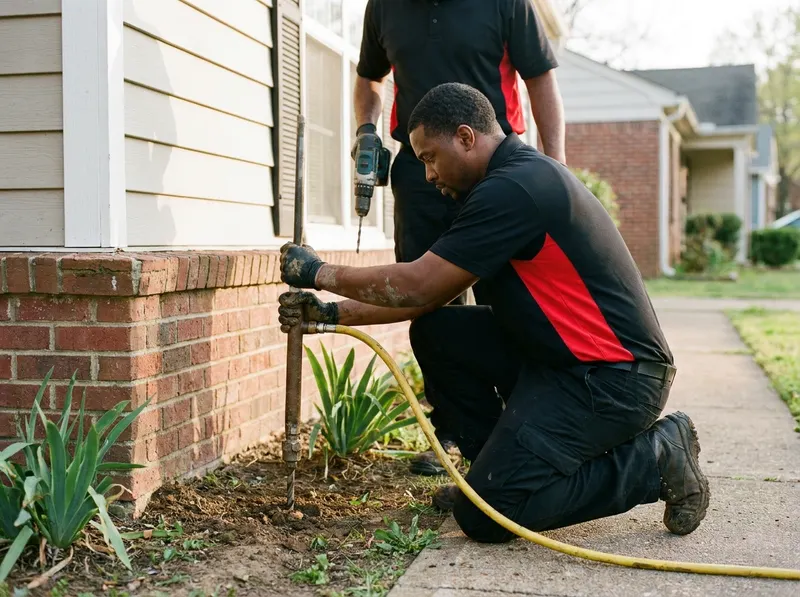
Subterranean termite eradication establishes an unbroken protective perimeter using non-repellent liquid termiticide solutions injected directly into excavated soil trenches along perimeter foundation walls, masonry footings, and support piers. In accordance with biological containment standards defined by the EPA , our specialists apply non-repellent formulations such as fipronil alongside discrete hexaflumuron subterranean bait stations placed every 10 to 15 linear feet. Termite workers unknowingly pass through the treated zone, transferring active ingredients back to subterranean nesting chambers through social grooming and trophallaxis. This systemic distribution collapses the entire reproductive matrix within 60 to 90 days. Technicians drill precision 1/2-inch ports through attached concrete patio slabs, carports, and front porches to treat the underlying soil bed, sealing all drilled access points with hydraulic mortar. The resulting barrier isolates structural sill plates, floor joists, and stud framing from the expansive, moisture-laden Memphis silty clay soils where native subterranean colonies thrive throughout Shelby County.
Get a quote →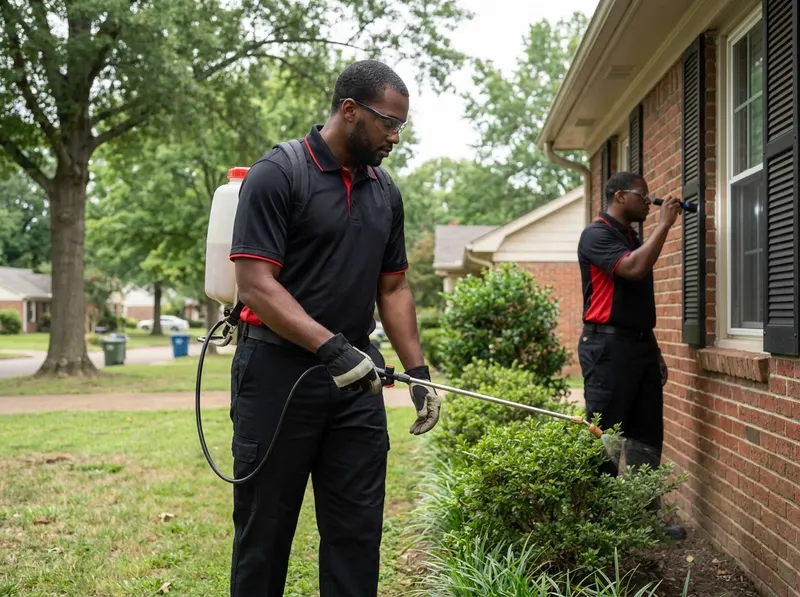
Quarterly perimeter pest defense utilizes high-stability, microencapsulated suspended liquid concentrates formulated to create a durable, 90-day all-weather boundary around the entire home footprint. Field specialists apply a continuous chemical band extending 3 feet up exterior masonry cladding and foundation stem walls, and 5 feet outward over surrounding mulch beds, patio perimeters, and walkway edges. Following commercial environmental guidelines from the California Department of Pesticide Regulation regarding non-target drift reduction, the polymer micro-droplets chemically bond to concrete, brick, and natural aggregate surfaces. This formulation prevents rapid wash-off during violent Mid-South downpours and resists breakdown under sustained 90-degree summer sunlight. The barrier halts exterior ground-crawling insect species, including odorous house ants, Argentine ants, field crickets, camel crickets, centipedes, and ground beetles, before these pests navigate exterior weep holes, sill gaps, or window framing.
Get a quote →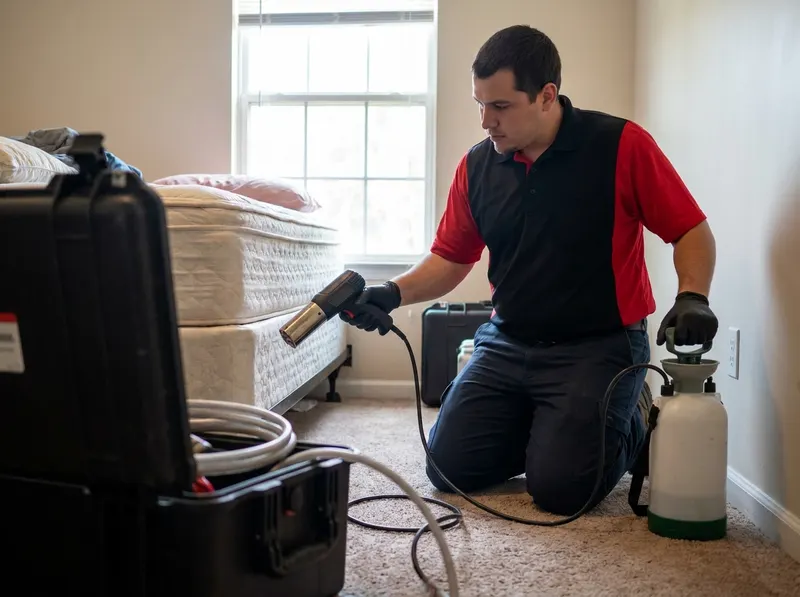
Bed bug eradication incorporates high-output structural thermal convection systems operating alongside targeted, multi-mode chemical insect growth regulators to eliminate all life stages within a single coordinated intervention. High-velocity heating units raise ambient room air temperatures to a lethal range of 122 to 135 degrees Fahrenheit, driving desiccating heat deep into internal mattress coils, upholstered furniture frames, carpet tacks, and hollow wall voids. Technical eradication practices follow protocols established by the Pest Control Technology trade association to verify lethal thermal thresholds across dense structural masses. Technicians supplement the thermal application with low-odor, micro-residual insect growth regulators and silica aerogel dusts behind electrical faceplates and interior baseboard perimeters. This integrated approach terminates adult bed bugs, nymphs, and eggs within hours, allowing residents to reoccupy bedrooms without protracted multi-day evacuations or repetitive furniture disposal.
Get a quote →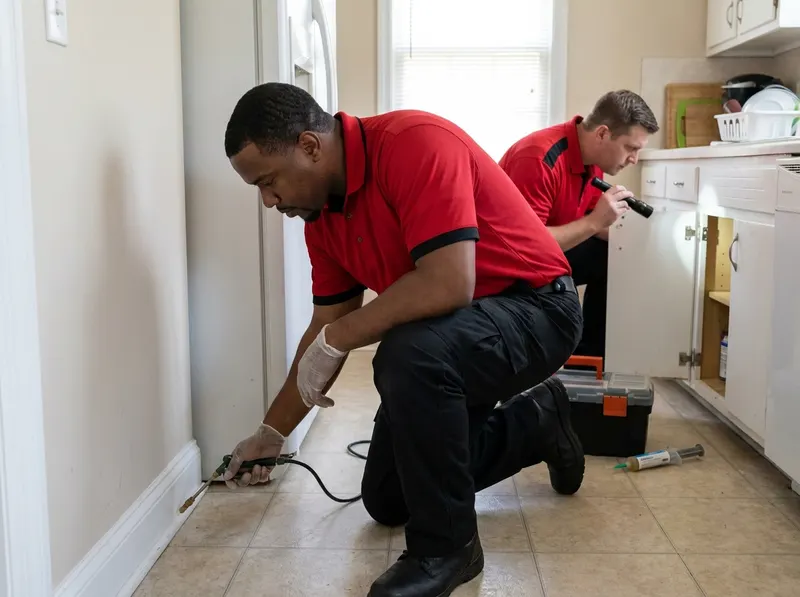
Cockroach remediation stops pervasive infestations through targeted structural micro-baiting, localized insect growth regulator applications, and mechanical crack-and-crevice treatments. For persistent German cockroach colonies infesting kitchen cabinets, behind refrigeration motor housings, and within bathroom plumbing access chases, technicians apply non-staining abamectin and indoxacarb gel baits into tight crevices where insects hide. For larger American and smokybrown cockroaches navigating dark plumbing corridors and humid crawlspaces, technicians inject dry boric acid and diatomaceous dust into deep wall voids and utility chases. Applying chemical management protocols recommended by the University of Kentucky Department of Entomology , these treatments prevent cockroach nymphs from molting into sexually mature adults, which halts breeding cycles. This multi-phase strategy neutralizes existing roach harbors and provides durable residual control inside high-moisture interior zones.
Get a quote →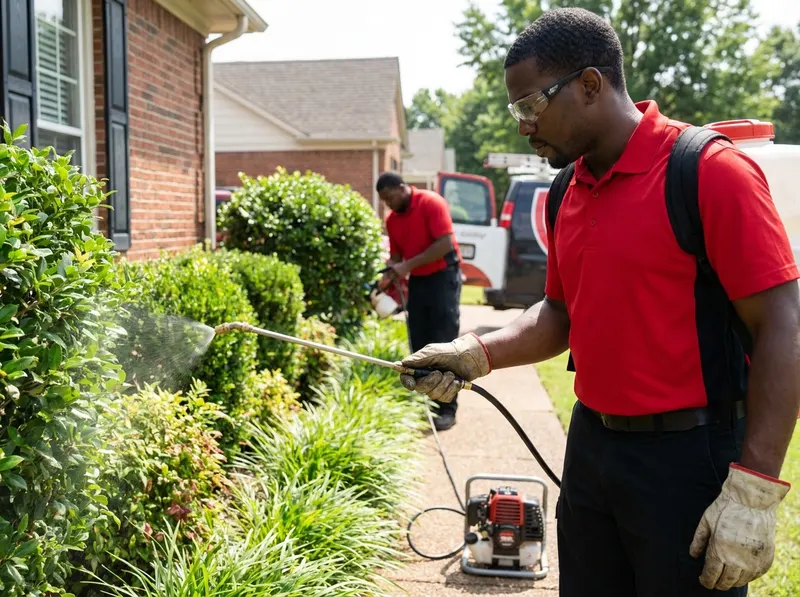
Mosquito suppression uses ultra-low volume micro-droplet mist blowers to apply synthetic pyrethroids combined with polymeric surfactants directly onto the underside of broadleaf foliage, shaded landscape beds, groundcovers, and deck joists. Operating according to vector suppression directives outlined by the CDC Division of Vector-Borne Diseases , treatments focus on the daytime resting sites of adult female mosquitoes to prevent disease transmission vectors such as West Nile virus. The surfactant matrix allows active chemical ingredients to adhere securely to leaf surfaces, resisting rain wash-off for 21 to 30 days while leaving ornamental plants unharmed. Monthly applications from May through September systematically collapse local reproductive populations in residential neighborhoods surrounding the humid lowlands, drainage swales, and standing-water zones of Shelby County.
Get a quote →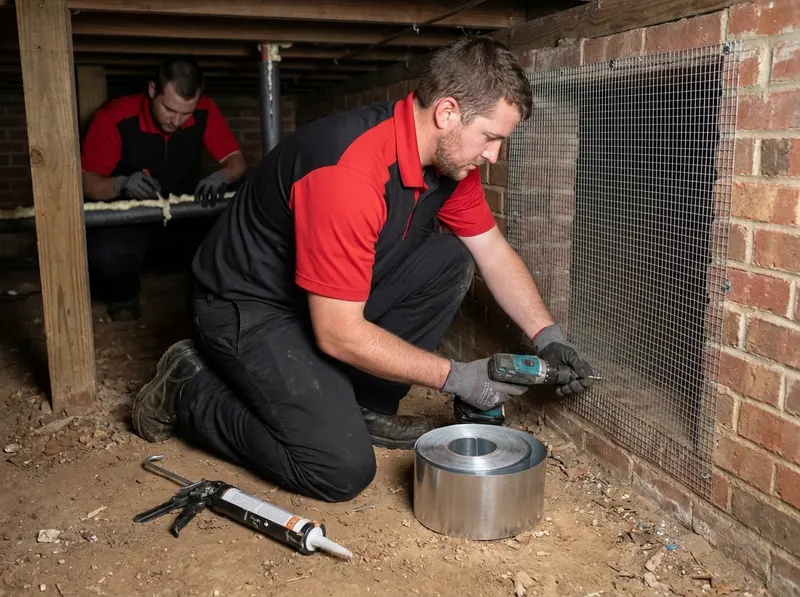
Rodent containment stops roof rat and house mouse incursions by mechanically securing vulnerable structural breach points and applying focused interior trapping matrices. Technicians inspect the full exterior perimeter to seal roofline returns, soffit junctions, air-conditioning line penetrations, foundation vent screens, and crawlspace access hatchways using 1/4-inch heavy-gauge galvanized steel hardware cloth and expanding copper wire mesh. Following structural wildlife mitigation standards curated by the Internet Center for Wildlife Damage Management , our specialists avoid exterior-only baiting, which can leave dead rodents inside interior wall voids. Instead, we deploy mechanical snap-trap matrices and non-toxic tamper-resistant monitoring units inside attics and subfloor spaces to remove trapped rodents quickly. This physical defense system permanently closes rodent entry points driven by autumn temperature drops across Mid-South neighborhoods.
Get a quote →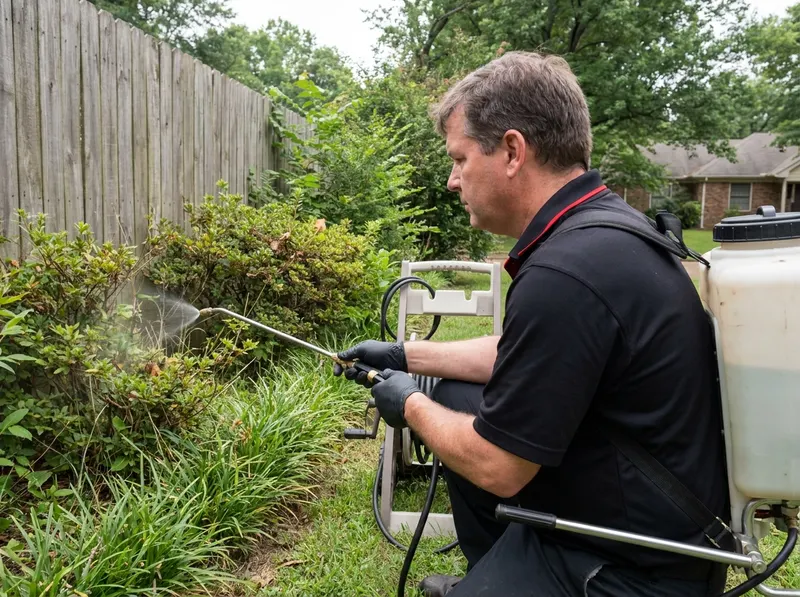
Flea and tick yard treatments target turfgrass, landscape perimeters, shaded dog runs, and low-hanging tree canopies with an integrated formulation of adulticides and juvenile hormone mimics. Ground sprays are applied at high pressure to penetrate dense Bermuda and zoysia turf thatch where flea larvae, pupae, and parasitic ticks shelter away from sunlight. Technical implementation follows safety guidance published by the Virginia Department of Agriculture and Consumer Services to ensure target specificity and minimize environmental drift. The insect growth regulator disrupts the normal chitin formation of flea larvae, halting their transition to biting adults, while the adulticide knocks down active ticks on contact. This protocol provides a critical layer of structural defense for domestic pets throughout the warm, humid outdoor activity seasons across Shelby County.
Get a quote →Stinging insect remediation safely neutralizes and removes aggressive colonies of paper wasps, bald-faced hornets, yellowjackets, and carpenter bees from structural eaves, exterior siding, chimney chases, and landscape trees. Technicians utilize long-reach directional delivery systems to inject fast-acting knockdown aerosols and hydrophobic pyrethroid dusts directly into nesting cavities and eave overhangs. Our technical field approach aligns with the pest safety directives established by the National Pesticide Information Center to prevent accidental chemical exposure to non-target areas during aerial applications. Once technician safety is established and insect activity ceases, the physical nest structure is scraped clean and removed. Entry voids and carpenter bee drill holes are chemically treated and sealed with structural wood plugs to prevent re-colonization during subsequent breeding cycles.
Get a quote →You get a firm, itemized quote for your pest control sevice before any work begins, no surprises, no pressure.
Careful prep, tidy work, and a full cleanup when we are done. We treat your home and belongings like our own.
The same trusted, background-checked team from the first call to the final check.
Selecting an effective eradication framework requires matching the specific biology and entry behavior of the target organism to structural architecture. If a structure exhibits mud tubes, subterranean frass, or cellulose degradation along foundational sills and joists, property owners must choose sub-slab liquid termiticide trenching or an exterior non-repellent matrix baiting perimeter. If the operational target involves fast-breeding structural invaders such as German cockroaches or brown-banded roaches inside utility hubs, technicians deploy targeted insect growth regulators, localized particulate dusts, and bait matrix gels inside hollow wall voids and cabinet chases.
When handling seasonal outdoor vectors like biting mosquitoes or perimeter-invading house ants, properties demand wide-swath microencapsulated exterior misting and continuous foundation base band sprays. The engineering trade-off centers directly on chemical placement depth versus application surface coverage: deep-soil trenching and sub-slab injection require labor-intensive drilling and earth moving along the foundation perimeter to yield multi-year, persistent barrier integrity, whereas surface-level perimeter band treatments offer swift immediate knockdowns that degrade under intense ultraviolet radiation and require structured quarterly maintenance renewals. Furthermore, physical rodent exclusion using heavy galvanized steel hardware cloth demands mechanical modifications around soffit returns, foundation vents, and crawlspace hatchways to lock out roof rats permanently, whereas chemical rodenticide stations offer rapid population knockdown within attic insulation but leave structural gaps unsealed against subsequent seasonal incursions.
Every project gets a firm, written price after a free on-site visit. Ranges below for orientation.
Tell us about your pest control sevice job and we'll send a clear, written quote, usually the same day. Or just call and talk to a real Memphis pro.
(901) 749-8070
The unique geology and environmental conditions of the Mississippi River alluvial plain place distinct biological pressures on residential properties throughout Shelby County. Much of Memphis sits atop thick loess silt formations, wind-deposited fine silts that settle, crack, and shift substantially across alternating wet and dry seasons. This geological instability causes microscopic settlement fractures across aging brick-and-mortar foundation walls in historic neighborhoods like Central Gardens, Midtown, and Cooper-Young, and creates hairline foundation slab fissures in East Memphis ranch homes. These subterranean structural fractures provide immediate entry paths for subterranean termites, which require continuous contact with moisture-dense subfloor clays to survive. Furthermore, the extensive drainage networks and marshlands associated with the Wolf River, Nonconnah Creek, and the Mississippi River create severe, sustained relative humidity levels exceeding 75% throughout the summer months. This persistent moisture profile accelerates the proliferation of American cockroaches in subterranean sewer networks and drives heavy seasonal mosquito breeding in residential foliage from High Point Terrace out through Cordova and Germantown borders. In older properties built with unconditioned crawlspaces, unsealed ground soil constantly releases water vapor into floor framing, elevating wood moisture content above the 18% threshold that invites wood-boring powderpost beetles and dry-rot fungi. Implementing engineered perimeter barriers, foundation chemical injections, and encapsulated crawlspace envelopes tailored specifically to Mid-South silt soils provides the physical and chemical resilience necessary to protect local real estate from structural pest infestations.
Free estimates for Memphis & the surrounding area.
 RedCedar Pest Solutions